One strong sample does not make a season. Neither does a factory walkthrough photo or a confident commercial call. US, Canadian, and European importers who source apparel in Bangladesh need a repeatable way to compare partners. A supplier scorecard asks the same questions every time and stores the answers with evidence.
This guide is a decision tool, not a certificate. It does not invent capacity, audit outcomes, or claims that Zero Yards International holds BSCI, GOTS, or similar marks. Score what you can observe. Mark unknown fields as unknown. Then revisit the sheet after the first bulk delivery into Los Angeles, Vancouver, Rotterdam, or wherever your DC actually sits.
Why importers need a scorecard, not a memory
Bangladesh can support denim and non-denim woven, tees, polos, henleys, sweatshirts, hoodies, joggers, loungewear, activewear, undergarments, body warmers, and sweaters. That range is useful. It also means a tee specialist is not automatically a denim wash house. A hoodie line is not automatically a sweater mill. Without a scorecard, the loudest quote often wins, and quality gaps appear after cutting.
Time zones make informal notes worse. A New York merchandiser, a Toronto QA lead, and a Hamburg compliance owner will remember different parts of the same call. A shared sheet gives those roles one language before POs go out, and again after goods hit a US, Canadian, or European warehouse.
- Score shortlisted partners with the same criteria every season.
- Keep product capability separate from price pressure.
- Leave a record that survives staff changes on both sides of the Atlantic.
- Update scores after first bulk instead of relying on first-sample memory.
- Write why a partner was chosen, not only who was chosen.
What the sheet is for, and what it is not
A scorecard is a weighted comparison for a product family and a season. It is not a forever ranking of Bangladesh as a country, and it is not a pass or fail exam. Use it to flag gaps before you commit fabric. Recreate it when you add hoodies to a tee program, or when you move from EU drops to a US West Coast calendar.
Six criteria that usually decide the season
Score these six areas on their own. Then apply weights. A cheap hoodie quote should not rescue a weak quality system. A charming weekly email should not rescue a factory that has never made your construction.
1. Product fit
Ask whether the production path regularly handles your construction. Tees and polos need stable jersey grading. Sweatshirts and hoodies need fabric weight control. Denim needs wash development that is not treated like basic cut and sew. Sweaters and body warmers need knit or insulation capability that a woven shirt line may not have. Review recent similar styles, not a generic catalogue.
2. Development and sampling quality
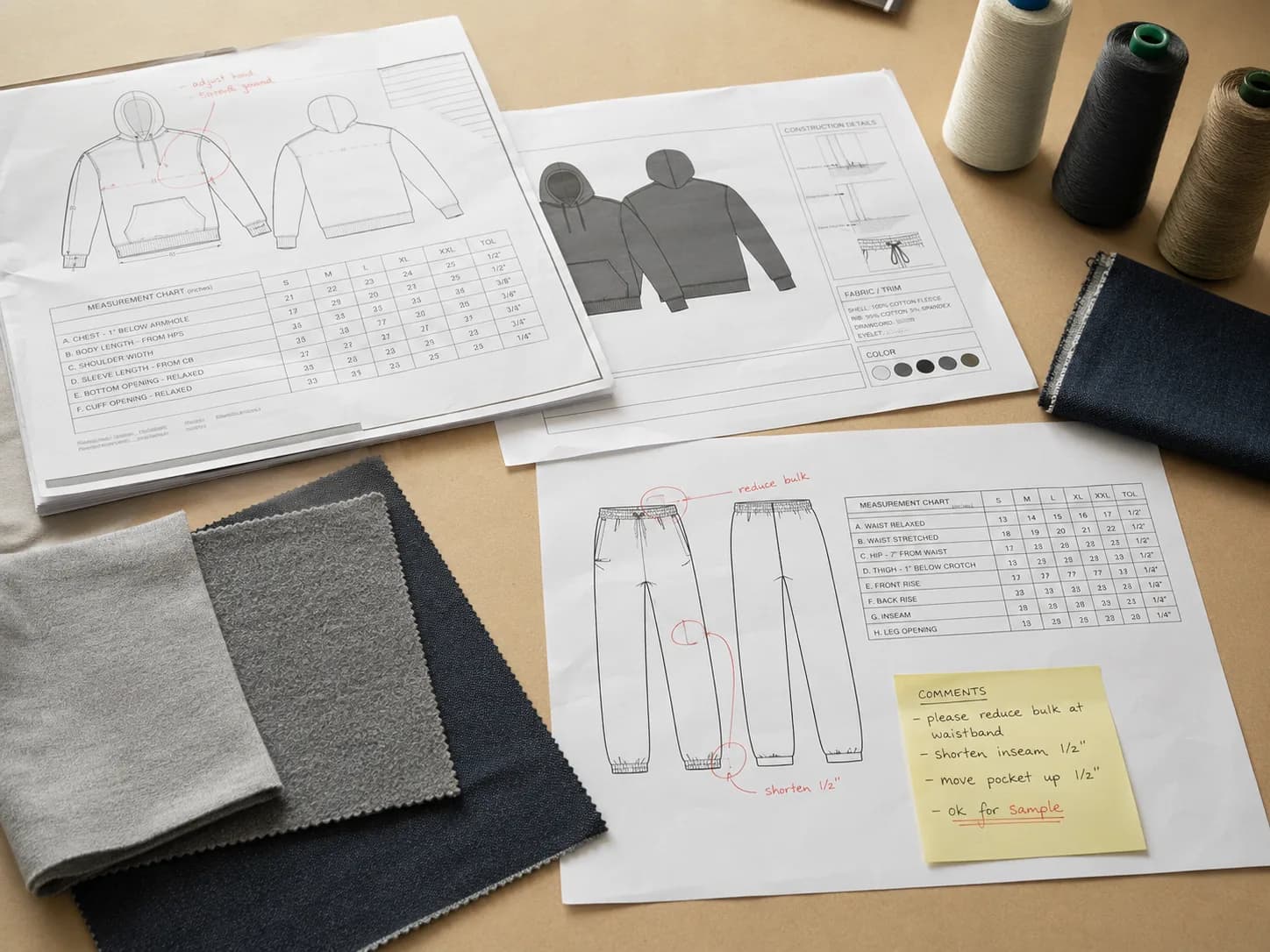
Score how the partner reads a tech pack, how measurement comments come back, and whether round two reflects round one. Strong desks ask about stitch type, rib, and label placement before they cut a sample. Weak desks send a pretty sample that ignored your notes, then push for bulk.
3. Quality systems
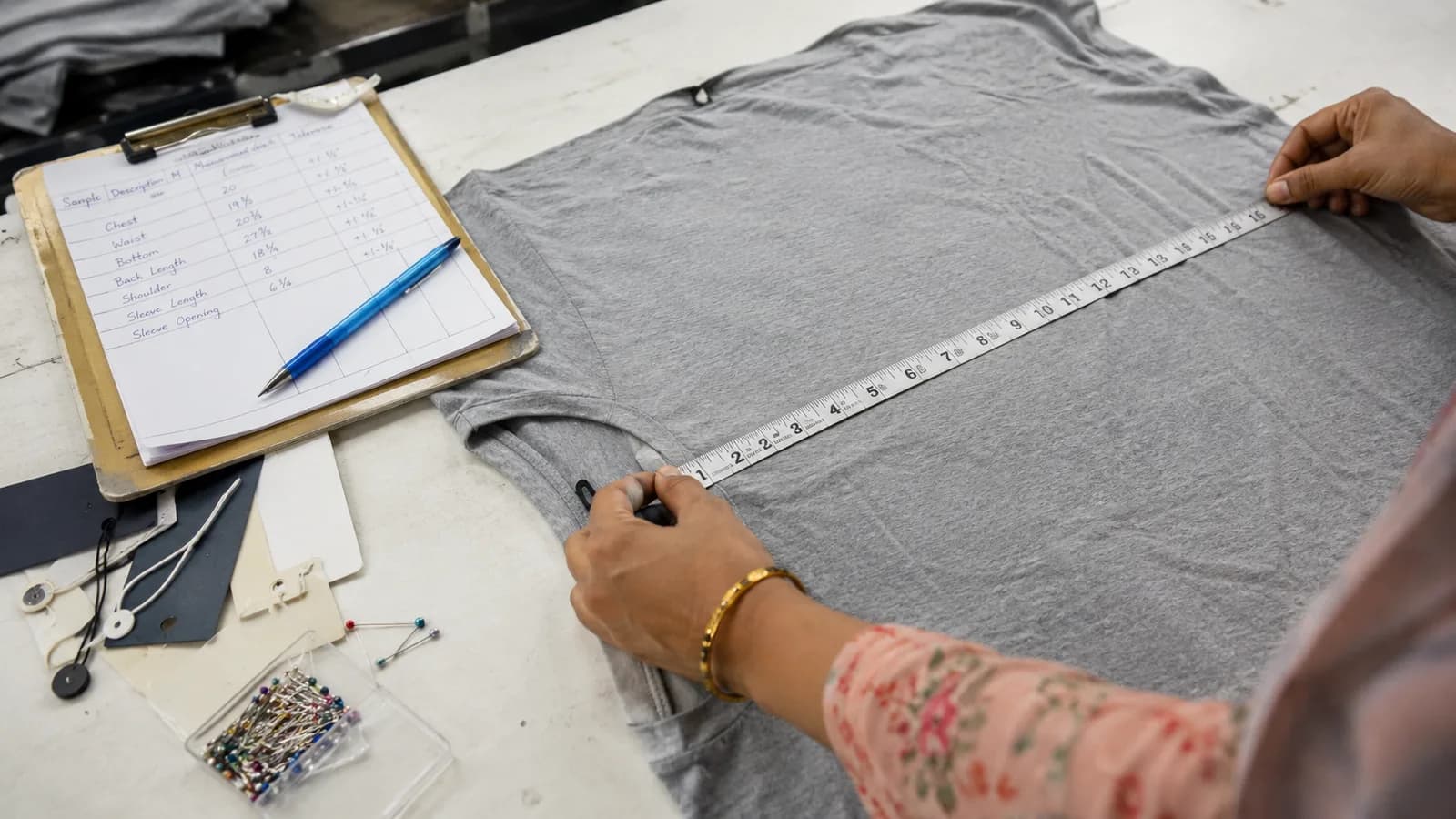
Look for checkpoint language: inline, pre-final, and how defects are classed. Ask how measurement verification and rework decisions work. If your program uses AQL language, confirm it in writing. Vague promises of premium quality are not a system.
4. Compliance readiness
Score the partner's ability to answer your list: testing, labeling, packing marks, and any audit files you actually require. US, Canadian, and European lists are not identical. Do not treat a logo wall as proof. Readiness means the desk can respond to your brief. It does not mean Zero Yards or any coordinator personally holds those standards.
5. Communication and ownership
Track whether one owner stays on the thread from sampling through shipment. Dhaka to New York, Toronto, or Berlin is a real time gap. Speed of reply matters less than whether the reply contains facts: material status, sewing progress, open approvals. Daily production-report review is useful when someone actually reads the report.
6. Delivery discipline
Score planning honesty and packing readiness. A partner that flags a zipper delay two weeks early is stronger than one that confirms the date until the week of cargo booking. US and Canadian ocean calendars usually need more transit buffer than Northern Europe. Delivery scores should include whether the partner respects that fact.
Suggested weights for private label programs
Weights should follow your category and risk. The table is a starting point for many US, Canadian, and European private label programs. Change the percentages when the product demands it, and write why so next season stays comparable.
| Criterion | Suggested weight | Why it matters |
|---|---|---|
| Product fit | 20% | Wrong production path creates quality and calendar problems later |
| Development and sampling | 20% | Early clarity reduces bulk rework and sample loops |
| Quality systems | 20% | Protects consistency across cartons into US, CA, and EU DCs |
| Compliance readiness | 15% | Supports your actual requirement list, not a generic logo set |
| Communication and ownership | 15% | Keeps decisions moving across time zones |
| Delivery discipline | 10% | Protects freight cut-offs and longer North American ocean calendars |
Raise compliance weight for kids-adjacent or regulated labeling programs if your counsel requires it. Raise sampling weight for denim wash or complex trim packs. Raise delivery weight for tight US West Coast in-store dates. Do not hide those shifts inside an undocumented spreadsheet.
A scoring method people will actually use
If merchandising will not fill the sheet, the sheet is decoration. Keep the method short enough for a Tuesday review between sample comments.
- Use a 1 to 5 scale with a one-line definition for each number.
- Require an evidence note: sample report, call summary, document checklist, or visit notes.
- Have at least two roles score independently, then reconcile.
- Mark unknown instead of scoring a polite 3.
- Archive season, product family, destination market, and date.
- Keep unit price in a separate column from capability scores.
Sample 1 to 5 definitions
- 1: Repeated gaps, no usable evidence, high risk for this product type.
- 2: Partial capability with process holes that need major follow-up.
- 3: Workable baseline with named follow-up items before bulk.
- 4: Strong fit with clear ownership and documented process evidence.
- 5: Proven fit for this product family with bulk-season evidence.
Reserve 5 for partners where you have bulk evidence into your market, not only a good proto. A clean first development round is a 3 or 4. Consistent quality, documents, and delay flags across a season earn the top score.
Evidence to keep beside the scores
Scores without files become opinion six months later, when a new buyer in Chicago or Copenhagen inherits the vendor list. Keep a short folder per shortlisted partner.
- Tech pack review notes: questions asked, points missed.
- Measurement report against your spec.
- Trim and label completeness on early rounds.
- Response time against your compliance list.
- Communication examples: escalation quality, not emoji speed.
- Delivery record from prior seasons if you have it.
- Visit or video notes if a tour happened.
If you work through a sourcing partner, score the coordination layer and the proposed factory path. Strong Dhaka follow-up with a weak mill still fails. A capable mill with no owner on the buyer thread also fails.
Shortlisting workflow for US, Canadian, and European teams
Issue a product-family brief: construction, destination markets, quantity range, compliance list, and warehouse date. Send it to two to four candidates. Score after samples and documents, not after the first sales call. Price comes after capability, so a low FOB cannot rewrite a weak product-fit score.
- Send one structured brief, including US, Canadian, and European destination notes if the style ships to more than one.
- Collect development evidence from each shortlist.
- Score independently, then reconcile in one meeting.
- Select on weighted total plus notes, not on one hero sample.
- Archive conditions for bulk: open tests, open trims, calendar risks.
Update the sheet after goods arrive
The first scorecard is a snapshot. Its value appears when cartons reach a US DC, a Canadian 3PL, or a European warehouse. Did inline quality match the PP? Did documents match the PO? Did delays get flagged before cargo booking?
- After first bulk: refresh quality, delivery, and communication with evidence.
- Before repeats: confirm product fit if styles changed.
- When adding a category: start a product-family version, do not reuse a tee score for denim.
- When replacing a partner: archive reasons so the next team does not relitigate from rumor.
Scoring a sourcing partner, not only a mill
Many importers without a Dhaka office use a sourcing partner for factory matching, sampling, production monitoring, inspections, and export documents. The scorecard still belongs to your team. Ask for evidence on similar product families, checkpoint descriptions, and how daily reports are used. A partner that cannot support scores with files is telling you something.
Pair the scorecard with a clear sourcing model and a pre-production checklist before bulk. Selection without approval discipline still produces messy cartons.
Frequently asked questions
- Should unit price sit inside the Bangladesh garment supplier scorecard?
- Keep commercial comparison separate. Mixing FOB into quality and fit scores hides tradeoffs that appear during bulk.
- How often should we update scores?
- After first bulk delivery, then each major season or when the product family changes. A frozen sheet misleads repeat orders.
- Can one sheet cover tees, denim, and sweaters?
- Use one framework, then keep product-family versions. Wash development and sweater knitting do not share the same evidence notes as basic jersey.
- How many partners should we score?
- Most teams score two to four options per product family. One option removes comparison. Ten options create fatigue.
- Does a high score mean the supplier is certified?
- No. A scorecard records your observed readiness. It does not replace testing, audits, or legal review, and it does not mean Zero Yards holds those certificates.
Ready to discuss a sourcing brief?
Share your product family, sample status, and market destination. We will help you prepare the next conversation around the details you provide.
Discuss your sourcing brief on WhatsApp