Most bulk surprises on Bangladesh apparel programs start before the sewing line. Color is half-approved. Size set comments live in a chat thread. Trim cards never arrive. Packing rules show up after cartons are already planned. US, Canadian, and European brands that treat pre-production as a gate, not a courtesy email, avoid a large share of that mess.
This checklist runs from lab dip through bulk release. It is process guidance for merchandising, technical, and operations. It is not a promise of calendars, factory capacity, or certificate status. Zero Yards International can chase submissions, host pre-production meetings, and keep files in one place. Your named product owner still signs the garment.
Why written gates matter more than a late inspection
Bangladesh remains a core origin for jersey, fleece, denim, woven, loungewear, and knit programs bound for North America and Europe. Partners who perform well share a habit: they do not cut bulk until the reference package is closed. Brands who struggle treat approvals as informal, then meet the gap at pre-final inspection when options are thin.
- Approvals create one reference for factory, Dhaka desk, and brand.
- Written comments travel better than a video call across time zones.
- Inspection then verifies the package, instead of rediscovering open questions.
- Finance and logistics can plan against a clearer ex-factory date.
- Disputes shrink when each round has a named owner and a stored file.
1. Lab dip and color approval
Treat color as a decision, not a formality. Body fabric, rib, collar tape, and trims often dye on different substrates. Confirm substrate, evaluation light, and whether each material needs its own approval. US retailers, Canadian 3PLs, and European stores may all see the same hoodie under different lighting. State the light in the brief.
- Put color standard and round number on every dip.
- Mark approved, revise, or reject with specific comments.
- State whether bulk lots must match under the agreed light.
- Note if approval covers one mill lot or the full season.
- Record who holds the physical standard in Dhaka and at the brand.
- Flag metamerism when body and rib are judged under mixed lights.
Many teams evaluate under D65 or an agreed retail light. Say so. If you use a digital color workflow, say whether the physical dip remains the final authority. Do not let a phone photo stand in for a signed dip.
2. Fabric and trim confirmation
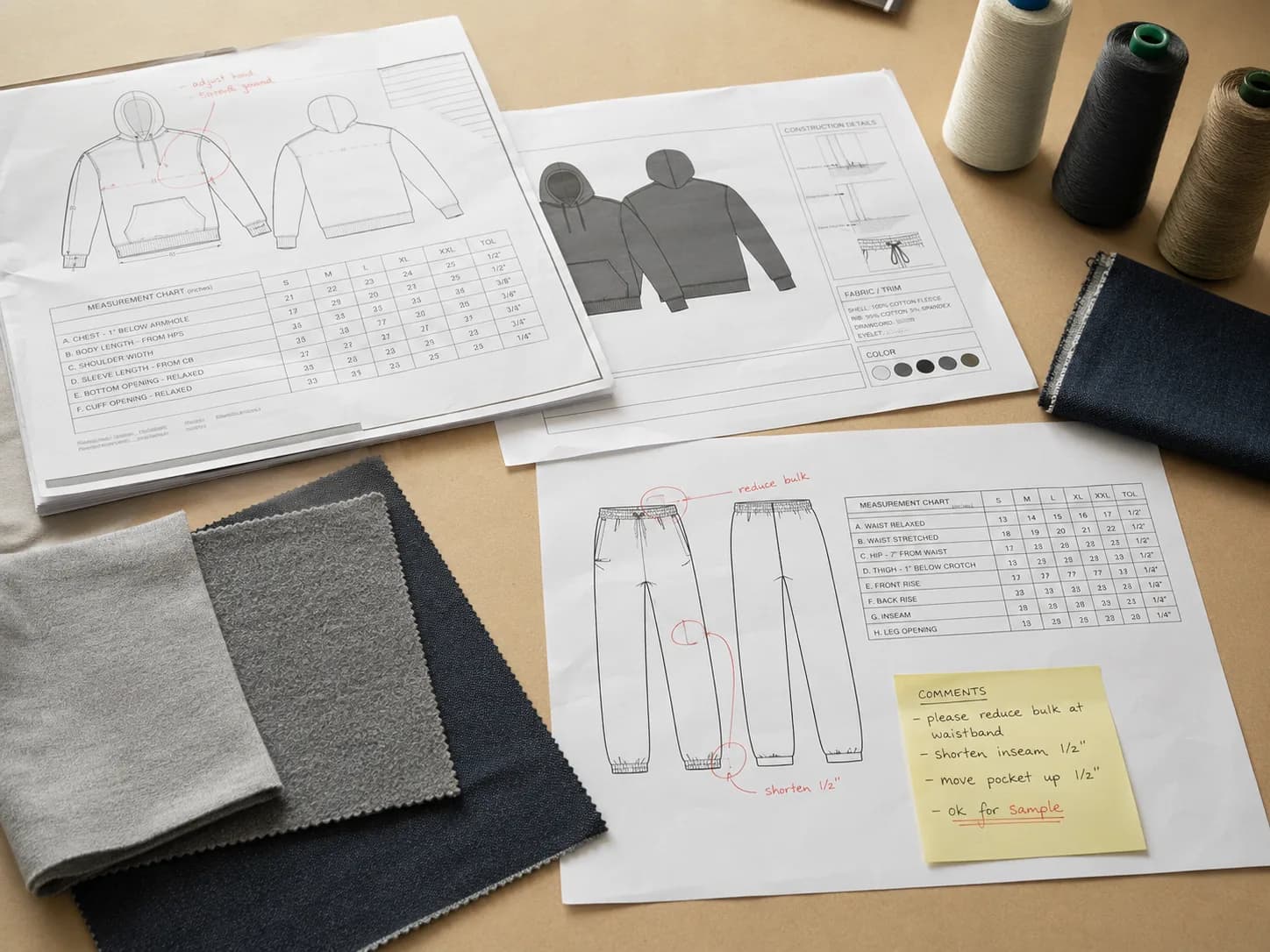
Lock the materials you actually approved before cutting. That includes main fabric, rib, interlining where used, thread direction where it matters, labels, hangtags, zippers, buttons, elastics, and packing components. For tees, polos, hoodies, joggers, denim, sweaters, and undergarments, the trim list looks different. Use the list for this style, not last season's tee card.
- Issue a trim card with artwork, placement, and supplier references.
- Match composition and weight to the approved bill of materials.
- Confirm nominated trims are in house or still on order.
- Record any substitute with date and approver name.
- Check care label content against US, Canadian, and European rules as your compliance team defines them.
Trim delays are a common reason bulk slips. A sourcing partner can chase mill submissions and confirm cards reach the floor. The brand still owns legal content on labels for each destination market.
3. Size set review
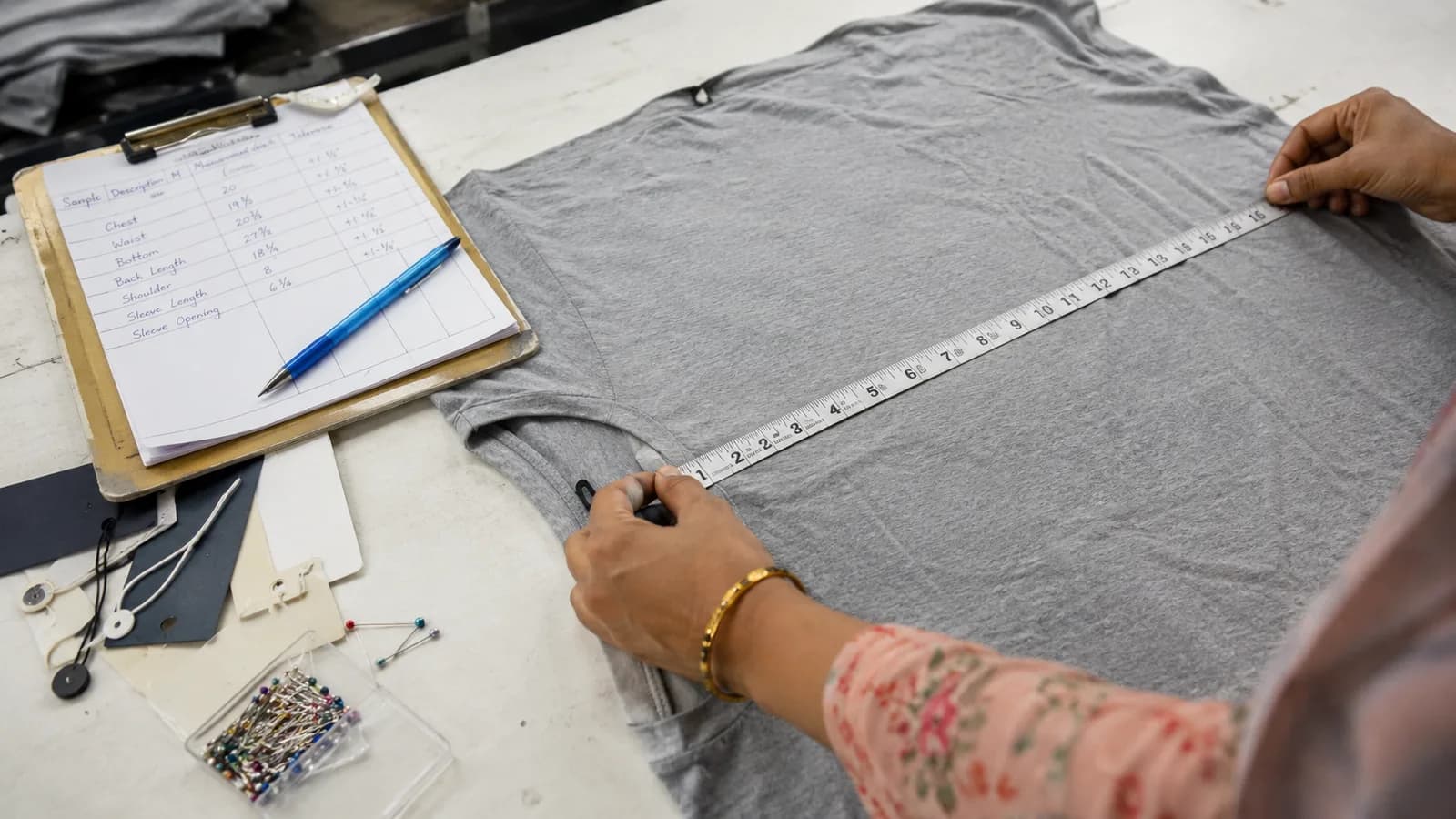
A size set proves graded measurements across the range, not only the sample size. Require a chart comparison. US programs often work in inches on buyer charts even when the factory works in centimeters. Canadian and European programs may stay metric. Write the unit system and the fit block. Do not assume the factory knows your brand block from a photo.
- Check critical points first: chest, length, sleeve, waist, rise, hem.
- Put tolerances in writing.
- Separate construction comments from measurement comments.
- State which sizes may proceed and which need another round.
- Photograph details that words will not carry across time zones.
| Size set checkpoint | What good looks like | Common gap |
|---|---|---|
| Grading logic | Smooth step between sizes on key points | Only sample size fits, bulk sizes drift |
| Tolerance language | Written plus or minus on critical measurements | Verbal okay with no chart update |
| Construction | Seams and finishing match the approved sample | Shortcut stitching on non-sample sizes |
| Approval record | Named approver and date per size decision | Chat thread with no final sign-off |
4. Pre-production sample sign-off
The PP sample should represent bulk intent: approved materials, construction, labels, and finish. If it is still a development compromise, say so and list open items. Teams that confuse a fit sample with a PP sample often find wash, print, or label placement gaps in bulk.
| Checkpoint | What to verify | Sign-off owner |
|---|---|---|
| Color and handfeel | Matches approved references | Brand product or QA |
| Construction | Seams, stitches, reinforcement | Brand technical |
| Measurements | Within agreed tolerances | Brand technical |
| Trims and labels | Correct placement and artwork | Brand plus sourcing desk |
| Wash and finish | Matches approved standard if used | Brand product |
| Packing presentation | Fold, polybag, carton marks if already defined | Brand operations |
Store the approved PP with a version number. If bulk uses a later correction, update the reference and tell inspection. Pre-shipment checks should compare against the latest package, not an old sample on a shelf in Dhaka or in your showroom.
5. Packing and document readiness
Do not leave packing to ex-factory week. Define assortment, carton marks, polybag print, hanger policy, and the document package while production can still change. US programs may need UPC placement and DC routing marks. Canadian programs may need bilingual care or packing notes as your team requires. UK and EU retail may need different barcode and language rules. Put the destination on the packing instruction, not in a later email.
- Confirm size and color ratio per carton against the order breakdown.
- Agree carton dimensions and weight limits with freight in mind.
- Share final packing instruction with factory and inspection contacts.
- List commercial documents at handover: invoice, packing list, and buyer forms.
- Time inspections with packing start so defects can still be corrected.
6. Bulk release gate
Bulk release is the moment cutting and sewing scale up. Treat it as a written gate even on carryover tees. Carryover still needs a check when fabric lot, trim supplier, or construction notes changed. A practical production window after this gate is often about 60 to 90 days plus freight. US and Canadian ocean time is usually longer than Northern Europe, so the warehouse date should already be on the sheet.
- Critical approvals closed, or deferred with owners and dates.
- Order confirmation matches the approved bill of materials.
- Inspection plan and AQL language agreed if you use them.
- Incoterm and payment method already written.
- One escalation owner on the brand side and one in Dhaka.
- Exceptions logged with risk acceptance where your process allows it.
Pre-production meetings and daily reports
A pre-production meeting is useful when the approved package is actually on the table: tech pack, PP, trim card, packing instruction, and order breakdown. Use it to confirm line plan, critical operations, and inspection timing. After bulk starts, daily production-report review only helps if someone reads quantities, quality flags, and material shortages the same day.
- Hold the PPM after PP sign-off, not as a substitute for it.
- Record attendees and open actions with dates.
- Agree which defects stop the line versus which go to rework.
- Tie daily reports to the same style and PO numbers used in approvals.
Working with a Dhaka sourcing desk on approvals
Teams in the US, Canada, and Europe without a Dhaka office often use a sourcing partner to keep the checklist moving: circulating comments, chasing trims, confirming execution against the approved package, and preparing inspection folders. Product decisions stay with the brand. Clear ownership is the point.
- Define who writes the summary after each round.
- Use one folder or PLM record for dips, charts, and PP photos.
- Set response windows that respect both North American or European hours and Bangladesh hours.
- Escalate open items before bulk, not after the first inline report.
Pair this checklist with your supplier scorecard and Incoterm notes before the first bulk commitment. Approval discipline reduces cost later. It does not replace clarity on payment, freight, and document ownership.
Frequently asked questions
- Is a fit sample the same as a PP sample?
- Not always. Fit samples may still use substitute materials or unfinished labels. A PP sample should reflect bulk intent as closely as practical. Name both stages in the brief so the factory does not ship the wrong reference.
- What if one trim is still pending at bulk release?
- Document the exception, the temporary reference, and the date by which the final trim must be approved. If the brand accepts the risk, record that with a named owner.
- Should every style run the full checklist?
- Carryover styles with unchanged materials may use a shorter path. New developments, new colorways, construction changes, and new factories should keep the full gate.
- Who should attend the final PP review?
- At minimum, brand product or technical plus the person who will sign bulk release. Operations and compliance should join when packing, labeling, or testing is non-standard for US, Canadian, or European destinations.
- Can a sourcing partner approve colors for us?
- A sourcing partner can coordinate submissions and summarize factory comments. Brand approval should stay with your named product or QA owner unless your policy delegates it in writing.
Ready to discuss a sourcing brief?
Share your product family, sample status, and market destination. We will help you prepare the next conversation around the details you provide.
Discuss your sourcing brief on WhatsApp